Northern Lights in Iceland 2026–2027: Season & Best Months
Plan Iceland’s 2026–2027 Northern Lights season: viewing months, darkness, Reykjavík departures and how to leave time for another attempt.
Written from general Iceland travel knowledge for the 2026–2027 aurora season. Sightings are never guaranteed; tour dates and retry rules are the operator’s to confirm on the product page.
The short answer
For a 2026–2027 trip, plan Northern Lights viewing between September 2026 and April 2027. Midwinter offers longer dark nights, while autumn and spring leave more daylight for sightseeing. Keep several evenings available, and check each operator’s departure dates and retry terms before booking.
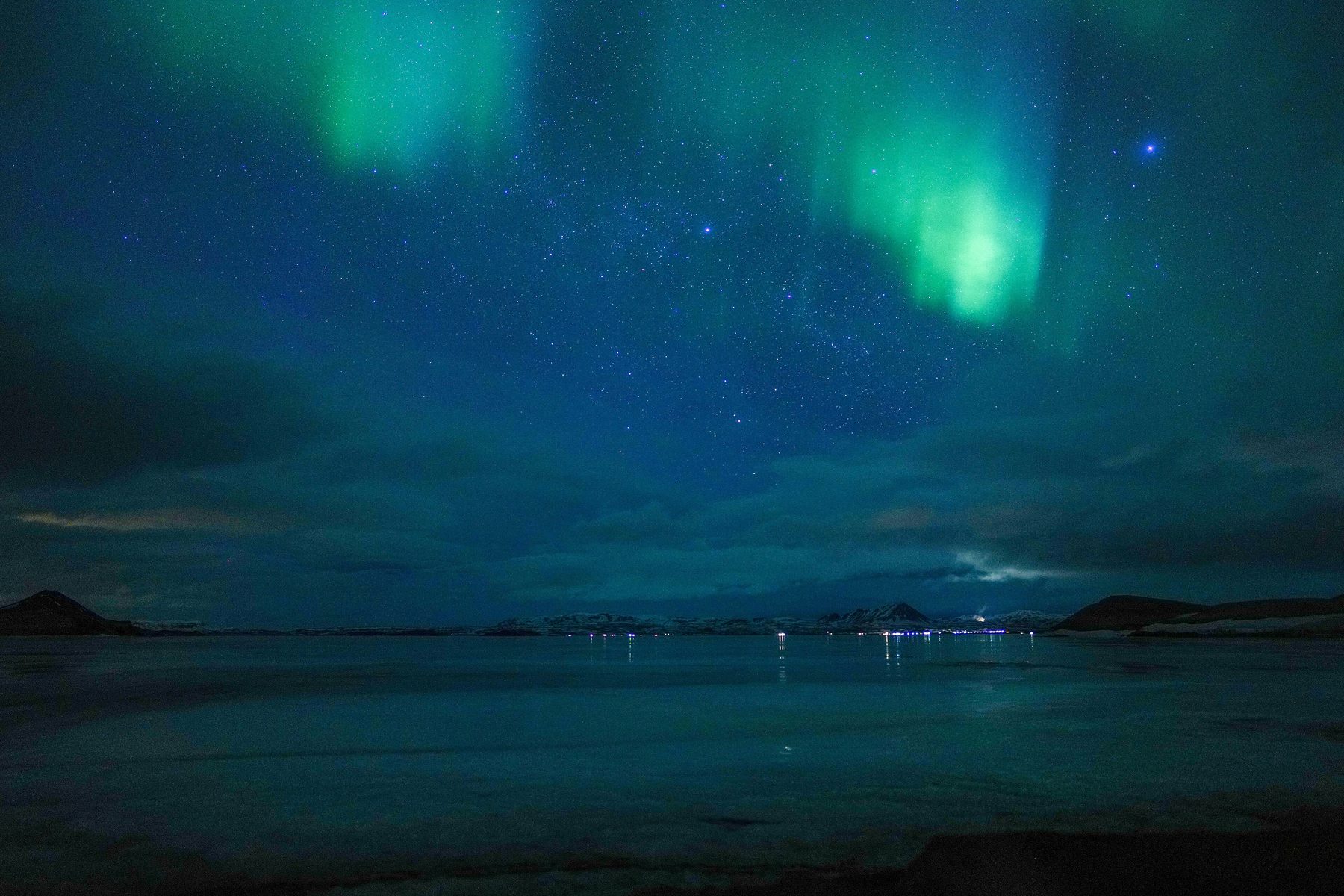
Book the 2026–2027 trip
Compare a car if you want wheels for the days, then a small-group hunt with a retry and a 101 hotel.
Compare cars at Keflavík AirportKeflavík Airport · Reykjavík · via DiscoverCars.com
You book and pay the partner on the next page. We earn a commission at no extra cost to you.
Late August 2026 is the first short dark window — not yet winter, not a reason to fly for aurora alone. September 2026 is when the 2026–2027 season actually starts. Book the small-group hunt from Reykjavík if you want a free retry when the sky stays empty — not a sighting guarantee. This hub is the calendar: which months are worth booking for, Reykjavík versus the countryside, and whether a guided hunt or a rental car is the right tool. For city vs countryside, see can you see the Northern Lights from Reykjavík; for the standing-still kit, what to wear on a Northern Lights tour. The physics have not changed; the dates have.
Read it with the evergreen pieces behind it: the best time to see the Northern Lights for the darkness/weather logic, best Northern Lights tours from Reykjavík compared when you are ready to pick a format, and how to read the forecast on the afternoon of the hunt. The booking path is the small-group hunt landing — then compare other formats on Northern Lights tours.
When the 2026–2027 season actually runs
The aurora is not a winter-only phenomenon. It is overhead in June too — you just cannot see it against a bright sky. Iceland’s 2026–2027 viewing season is bounded by dark hours, not by a promise of KP 9 every night.
- Late August 2026 — the very first usable dark window, especially away from Reykjavík. Nights are short. Treat this as a bonus, not a reason to fly.
- September 2026 through March 2027 — the season proper. Dark enough in the capital area, tours running most nights, and a real chance of a retry if night one is cloudy.
- Early April 2027 — still possible, but the dark window shrinks fast. Book the first nights of a spring trip, not the last.
- May–July 2027 — midnight sun. Save your money. No tour can invent darkness.
You need darkness, a clear gap in the cloud, and some solar activity. Two out of three is a grey sky. All three happen often enough between September and March that a well-planned trip is a reasonable bet — not a guarantee.
Operators typically start listing aurora nights from late August and wind them down in April. Exact first and last departures move with weather and demand; check the Northern Lights category rather than a screenshot from last winter.
Best months versus shoulder for 2026–2027
“Best” depends on whether you are optimising for hours of darkness, for roads you can still enjoy in daylight, or for the fewest cancelled nights.
- Sweet spots: September–October 2026 and February–March 2027. Nights are long enough. Weather is milder than midwinter. Daylight still exists for a Golden Circle or South Coast day. This is the window most first-timers should aim at.
- Deep winter: November 2026–January 2027. Maximum darkness, the most dramatic steam and ice, and the highest rate of wind, ice and tour reshuffles. Fine if you already accept winter Iceland. A poor first Iceland trip if you also wanted long hiking days.
- Shoulder: last week of August 2026 and the first half of April 2027. Possible sightings, shorter hunts, more twilight. Come for the country and treat the aurora as a maybe — or wait four weeks.
A bright moon does not cancel the season. It washes out faint displays and makes the landscape photograph well. Plan around cloud and darkness first; the moon is a modifier, not a veto.
Dark hours, not “KP 9 every night”
From Iceland you sit under the auroral oval. A Kp of 2–3 is often enough. Chasing a Kp-9 fantasy is how people stay in the hotel on a perfectly good clear night because an app looked “quiet”. Cloud cover decides more evenings than the solar number.
- Check the cloud map and the aurora forecast together — the Icelandic Met Office is the local source operators actually use.
- A low Kp under a hole in the cloud beats a high Kp under a solid overcast. Mobility is the product a tour sells you.
- Displays come in waves, often around magnetic midnight (roughly 10pm–1am), but a strong night can start earlier and run later. Be ready to stand still.
The practical walkthrough is how to read aurora forecast apps and the Kp index. Use it on the afternoon of the tour, not three weeks out.
Reykjavík versus the countryside
You can see the lights from Reykjavík on a strong night — Grótta and darker edges of the city are the usual local bets — and you will miss anything faint because of streetlight. That is the whole reason tours drive 30–60 minutes out. The honest city answer is can you see the Northern Lights from Reykjavík.
- Staying in Reykjavík (most first-timers): book a guided hunt, leave on night one or two of the stay, and keep a spare evening for the retry. Sleep in 101 / harbour / Laugavegur so pickup works, and take the KEF Flybus if you are not hiring a car that day. Do not spend the week standing at the harbour “just in case”.
- Self-driving the south-west or Ring Road: you already have dark lay-bys. You still need a forecast, a safe place to stop, and the discipline not to wander onto the ice at the roadside.
- North Iceland / Akureyri: often a clearer inland sky than the south coast. If that is your base, hunt from there rather than flying back to Reykjavík for a coach.
Self-drive versus a guided tour this season
A rental gives you the clock. A guide gives you the forecast, the legal pull-off, and — on most Reykjavík products — a free retry if the sky stays empty. For a first visit in 2026–2027, most people should take a tour, then maybe self-drive a second night if they already have a car and a clear forecast. The longer comparison is self-drive aurora hunting vs a guided tour.
- Take a tour if this is your first Iceland winter, you are in Reykjavík without a car, the forecast is messy, or you want the retry baked in. The sensible first booking is the small-group hunt with free photos and a retry. Compare formats in tours compared: coach, small-group, boat, Super Jeep.
- Self-drive if you already hired a car for the Ring Road or south-west, you are comfortable with winter or autumn roads, and you will actually leave town instead of “seeing how it looks from the hotel”.
- Do not treat a 2WD city car plus a viral pin as a hunt plan in a storm week. Winter driving still applies in October and March.
A first-timer’s best aurora tool is a guide with a retry policy, not a rental you will be scared to take off the ring road at 11pm.
If the rest of the trip is tours anyway — Golden Circle, South Coast, ice cave — skip the car for the aurora night. Hire for the daylight itinerary, not as an aurora strategy.
Compare optionsBrowse Northern Lights tours for the 2026–2027 seasonHow to book this season so one cloudy night does not sink it
- Book night one or two, not the last night. The retry is useless if you fly home at 8am.
- Allow three or more nights in Iceland during the dark season. One night is a lottery; three nights is a plan. See how many nights for the Northern Lights.
- Read the no-sighting policy before you pay — what happens if you do not see them.
- Dress for standing still in wind, not for a city walk. The kit list is what to wear on a Northern Lights tour.
- Pair the hunt with a daytime trip that would be worth it anyway — Golden Circle, South Coast, a lagoon — so a cloudy night is disappointing, not the whole holiday.
- Hold the room and the airport coach before you fly — Reykjavík hotels and the KEF Flybus — so night one is not spent in a taxi queue.
Once a format is picked, what to expect on the night walks through pickup, the wait, and the realistic look of a “normal” sighting (often fainter than the brochure until your camera opens up).
Frequently asked questions
When does the 2026–2027 Northern Lights season start in Iceland?
Usable dark hours begin in late August 2026 away from the capital and are reliable in Reykjavík from September. The season then runs through March 2027, with a thinning window in early April. Midsummer nights are too bright — there is no workaround.
What are the best months to see the Northern Lights in Iceland in 2026–2027?
September–October 2026 and February–March 2027 are the practical sweet spots: dark enough, milder than midwinter, and still with daylight for other trips. November–January have the longest nights and the most weather disruption.
Can I see the Northern Lights in Iceland in August 2026?
Late August can produce short, real hunts, especially outside Reykjavík, but it is shoulder season. If the aurora is the reason for the trip, wait until September. If you are already here, treat it as a bonus night, not a guarantee.
Do I need a high Kp index to see the aurora from Iceland?
No. Iceland sits under the auroral oval, so Kp 2–3 is often enough. Clear sky and a dark site matter more than a dramatic Kp number. A high Kp under solid cloud is still a grey evening.
Should I take a Northern Lights tour or self-drive in 2026–2027?
Most first-timers should take a small-group hunt from Reykjavík — you buy forecast-reading, a legal stop, and usually a free retry. Self-drive makes sense if you already have a car, you are comfortable on the roads, and you will actually leave the city — compare KEF car hire if you self-drive dark sites.
Can I see the Northern Lights from Reykjavík itself this season?
Sometimes, during a strong display, from darker edges of the city such as Grótta. City light washes out faint shows, which is why tours drive out of town. Do not plan the whole season around a harbour-wall view.
Book it: related Iceland tours
Turn the plan into a trip — browse the experiences from this guide.

Keep reading
- Best Time to See Northern Lights in Iceland: Months & HoursWhen can you see Northern Lights in Iceland? Compare September–April, dark hours and cloud conditions, then choose a suitable Reykjavík tour.
- How Many Nights for Northern Lights in Iceland: Budget 3–4 (2026–2027)One aurora night is a cloud-cover gamble. Budget 3–4 nights so a free-retry tour can actually work — and how to place them in the 2026–2027 season.
- How to Read an Aurora Forecast in Iceland: Kp Index and Cloud Cover ExplainedWhat the Kp number on an aurora forecast actually means, why the cloud-cover map matters more, and how to check the forecast so it changes your plans in time.
- No Northern Lights? What Really Happens When an Iceland Aurora Tour Sees NothingCancelled before departure, a free second attempt, or nothing at all — how aurora tour policies differ, and what to check before you book.
- Coach, Minibus or Boat? How to Pick the Right Northern Lights Tour in IcelandLarge coach, small minibus or a boat off Reykjavík harbour — each Northern Lights tour format trades off differently on speed, comfort and mobility.
- What to Expect on a Northern Lights Tour in Iceland: Pickup, Wait & Late ReturnPickup window, a drive to wherever the sky opens, standing still in the wind, and a midnight return — what an Iceland aurora tour is actually like.